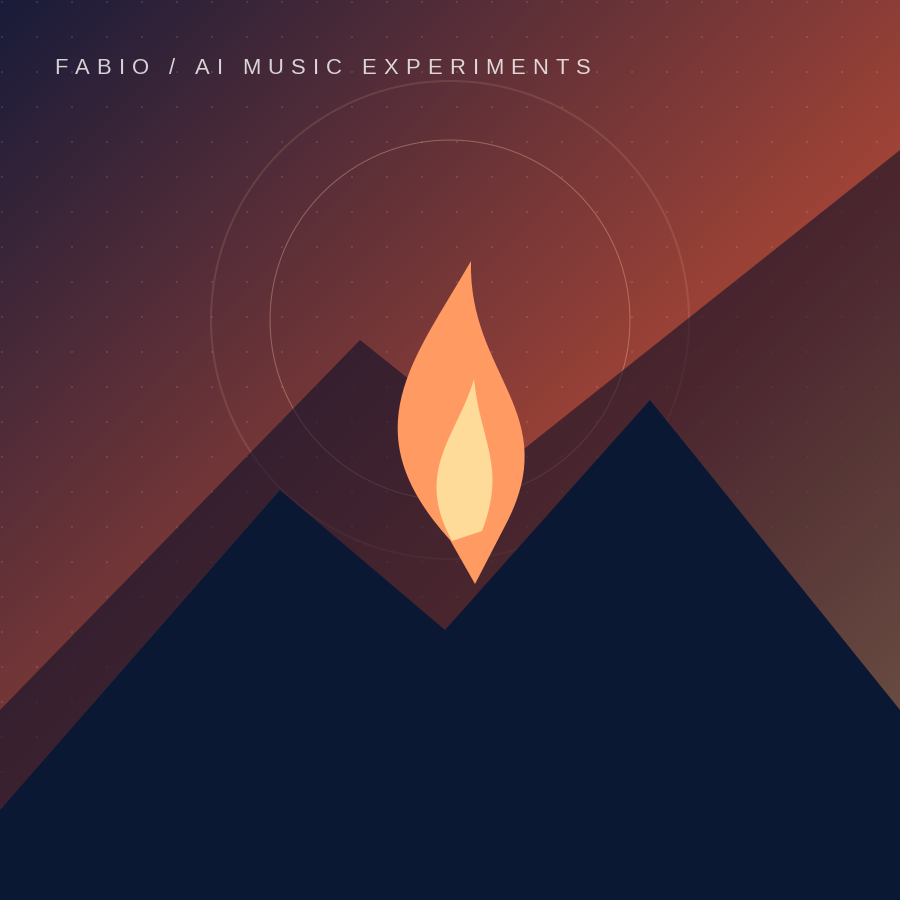
 01 / 03CINEMATIC / EPIC
Die letzte Flamme
A musical experiment with cinematic storytelling and an epic feel. AI served as the starting point for a track focused on atmosphere and narrative impact.
What happens when a musical idea meets generative AI? Using Suno and Google Flow Music I developed three very different songs – from cinematic and epic to electronic and Portuguese folk music. The first versions were already close to the goal. I refined them through several iterations and additional external editing.
All three tracks can be played in full. They were created as part of my experiments with generative music AI. The covers are original graphics created for this portfolio.
01 / 03CINEMATIC / EPICA musical experiment with cinematic storytelling and an epic feel. AI served as the starting point for a track focused on atmosphere and narrative impact.
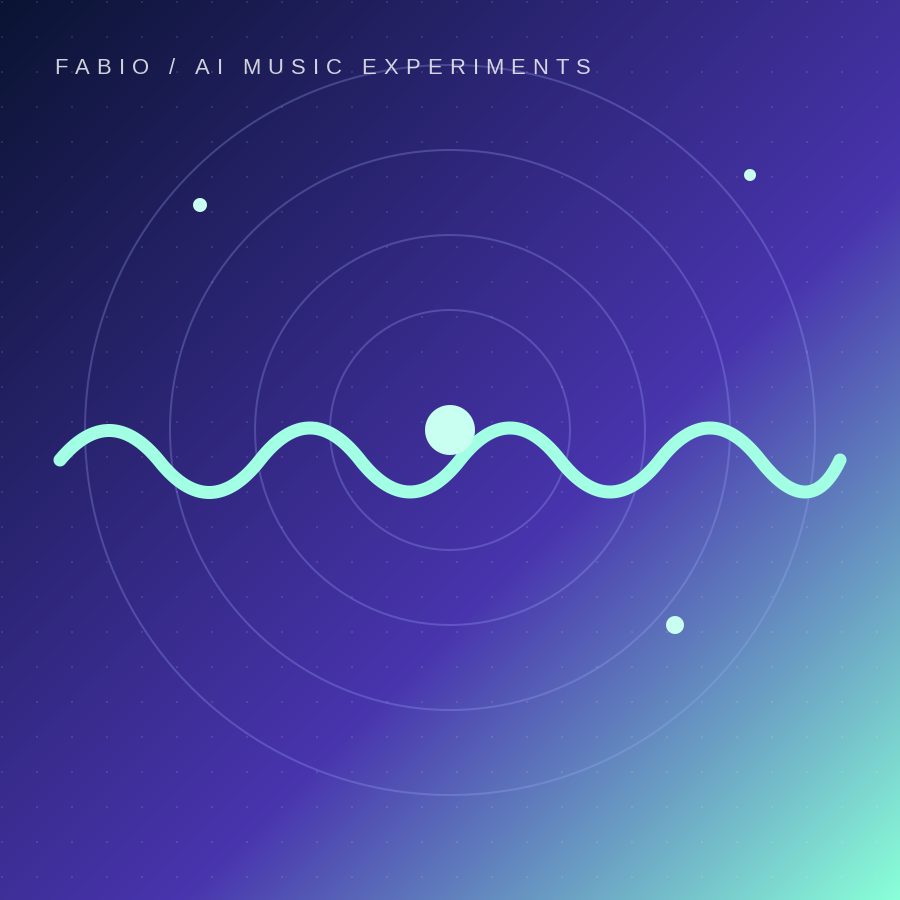 02 / 03ELECTRONIC / VOICE
An electronic track for which I also uploaded a recording of my own voice. This allowed me to explore how personal audio can become part of an AI-assisted music workflow.
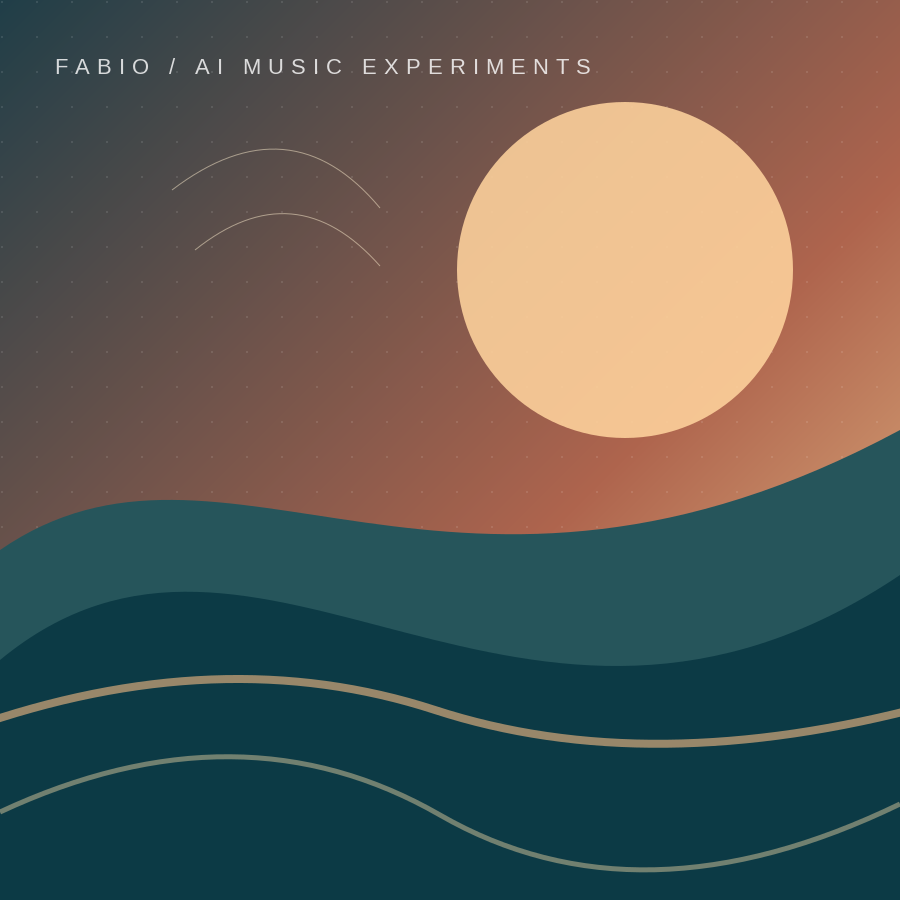 03 / 03PORTUGUESE / FOLK
A Portuguese-language track with folk influences. Here I explored how AI can support creative ideas across different languages and musical styles.
The difference between quick generation and a usable piece of music is deliberate iteration, clear creative direction and careful editing.
It starts with a musical direction: an epic atmosphere, electronic dance sound or Portuguese folk music. This becomes the creative brief.
I test my ideas as audible tracks using Suno and Google Flow Music. For “Never Stop Dancing”, I also use a recording of my own voice as source material.
I evaluate the results, adjust the brief and explore further versions. The first draft is often close to the desired result – but not automatically finished.
I also refine the results in other software. This combines the speed of AI generation with my own selection and editorial control.
With music in particular, it is impressive how quickly an idea can become an audible track. My contribution is to evaluate the result critically, make deliberate variations and develop it for the intended use.
For the electronic track “Never Stop Dancing”, I uploaded a recording of my voice and used it in an AI-assisted music process.
The example demonstrates how personal audio and generative tools can be combined. It is not possible to determine precisely from the final file alone how each part of the audio was technically transformed.
Listen to the trackAn additional 20-second sound sketch was created using ChatGPT-assisted Python code and algorithmic sound synthesis. Unlike the three songs, it is not direct output from a text-to-music model.
Composition supported by code, with sounds synthesised numerically.
These experiments show how AI can accelerate musical ideas and open up new directions. What matters is the ability to select, edit and use results intentionally – not the number of generated versions.


